I remember the night it all went wrong. My friends had gathered for a casual get‑together, and I’d promised a strawberry dessert that would knock everyone’s socks off. I opened the fridge, grabbed a handful of strawberries, and, in a moment of culinary bravado, decided to turn them into something airy and light. The result? A clumpy, heavy mousse that tasted like it had been left in the sun for too long. That disaster was the spark that set me on a mission to create the ultimate strawberry mousse that would make every bite feel like a breath of fresh summer air.
Picture the scene: the kitchen lights flicker, the scent of ripe strawberries mingles with the faint aroma of coconut cream, and the gentle hum of the refrigerator is the soundtrack. You’re watching the strawberries blush as they’re diced, the maple syrup glistening like amber drops. The sound of the blender whirring, the gentle hiss of aquafaba frothing, and the subtle snap of agar powder dissolving—each cue builds anticipation. And then, just before the final swirl, the mousse should look like a cloud that’s just about to drift away. If you can’t feel that, you’re not ready for what’s coming.
What makes this version stand out isn’t just the airy texture—it’s the harmony of flavors and the clever use of ingredients that many recipes overlook. I dare you to taste this and not go back for seconds. The maple syrup adds a caramel depth that balances the bright fruit, while the coconut cream gives it a velvety mouthfeel that feels indulgent yet guilt‑free. The aquafaba, the liquid from a can of chickpeas, is the secret to that lightness, acting like a natural egg white but without any dairy. And the agar powder? It sets the mousse just enough to hold its shape but still melts instantly on your tongue, delivering that “first bite feels like a summer breeze” sensation.
If you’ve ever struggled with making a mousse that’s both stable and airy, you’re not alone—and I’ve got the fix. Most recipes get this completely wrong, relying on gelatin or heavy cream that clumps or tastes too rich. Here’s what actually works: a combination of aquafaba, agar, and coconut cream, sweetened with maple syrup and vanilla, creates a mousse that is light, flavorful, and structurally sound. Picture yourself pulling this out of the refrigerator, the whole kitchen smelling incredible, and serving it with a drizzle of extra maple syrup that glistens like dew on a morning leaf. Stay with me here—this is worth it.
What Makes This Version Stand Out
- Taste: The bright, natural sweetness of fresh strawberries is amplified by maple syrup’s subtle caramel notes, creating a flavor profile that feels both indulgent and refreshing.
- Texture: Aquafaba provides a silky, airy lift while agar powder gives the mousse a gentle set that melts in the mouth, delivering that coveted “cloud” sensation.
- Simplicity: With only six ingredients and no need for heavy cream or gelatin, this recipe is a breeze to make, even for beginners.
- Uniqueness: The combination of coconut cream and aquafaba is rarely seen in traditional mousse recipes, giving this version a tropical twist that feels fresh.
- Crowd Reaction: Friends who taste this will immediately ask for seconds—an undeniable sign of a truly irresistible dessert.
- Ingredient Quality: Using fresh, ripe strawberries and high‑quality coconut cream ensures that every bite is bursting with real flavor.
- Make‑Ahead Potential: The mousse can be prepared up to 24 hours in advance, allowing you to focus on other dishes during a busy dinner party.
- Visual Appeal: The glossy finish and vibrant pink hue make it Instagram‑ready, perfect for sharing on social media.
Inside the Ingredient List
The Flavor Base
Fresh strawberries are the heart of this mousse. They bring a natural sweetness and a bright, tangy flavor that cuts through the richness of coconut cream. If you’re using out‑of‑season berries, look for organic, locally sourced ones—they’ll have a deeper flavor profile. Skipping strawberries would turn this into a plain coconut dessert, losing that signature summer punch.
The Sweetener
Maple syrup is more than just a sweetener; it adds a subtle caramel depth that balances the fruit’s acidity. A tablespoon of pure maple syrup is enough to lift the flavor without overpowering the strawberries. If you prefer a lighter sweetness, substitute with agave nectar or a splash of lemon juice for a bright twist.
The Texture Crew
Aquafaba, the liquid from a can of chickpeas, is the secret to that airy lift. It acts like a natural egg white, creating tiny air bubbles that give the mousse its cloud‑like texture. If you’re vegan, you can also use silken tofu blended until smooth, though it will produce a slightly denser mousse. The agar powder is a plant‑based gelling agent that sets the mousse just enough to hold its shape but still melts instantly on your tongue.
The Final Flourish
Coconut cream adds a silky, tropical richness that balances the lightness of the aquafaba. It’s also a great dairy‑free alternative that keeps the mousse creamy without heaviness. A pinch of vanilla extract deepens the overall flavor profile, adding warmth that complements the maple’s caramel notes. Skipping vanilla will leave the mousse a touch flat, lacking that aromatic complexity.
Everything’s prepped? Good. Let’s get into the real action…
The Method — Step by Step
- Dice the strawberries into bite‑size pieces, reserving a handful for garnish. Place them in a blender with maple syrup and vanilla extract, pulsing until the mixture is smooth but still has a few small chunks for texture. This step is crucial; you want a puree that’s thick enough to hold the mousse but still silky. If you prefer a smoother finish, strain the puree through a fine mesh sieve.
- In a small saucepan, gently heat the coconut cream over low heat until it’s warm but not boiling. Add the agar powder, whisking constantly to prevent clumping. The mixture should become slightly translucent and begin to thicken. This is the moment the mousse will gain its structure—watch the consistency closely.
- Fold the warm coconut‑agar blend into the strawberry puree, stirring until fully incorporated. The mixture should look glossy and slightly thicker. This step is where the flavors meld, and the mousse starts to take shape. Be patient; rushing it can cause separation.
- Whisk the aquafaba in a clean bowl until soft peaks form—about 3–4 minutes with an electric mixer. The peaks should be firm yet pliable, resembling meringue. This airy foam is what will lift the mousse to cloud‑like perfection.
- Gently fold the beaten aquafaba into the strawberry‑coconut mixture, using a spatula and a gentle, circular motion. This incorporation is delicate; over‑mixing can deflate the foam, resulting in a denser mousse. Keep the motion light, as if you’re cradling a fragile cloud. The mousse should look light and airy.
- Divide the mixture into serving glasses or ramekins. Tap the glasses on the counter to release any trapped air bubbles and create a smooth surface. If you’re feeling adventurous, swirl a thin ribbon of melted dark chocolate on top for a touch of bittersweet contrast.
- Refrigerate the glasses for at least 30 minutes, or until the mousse is firm to the touch. During this time, the agar will fully set, giving the mousse that gentle bite. If you’re short on time, you can set the mousse in a cooler with ice packs for 15 minutes; it will still hold its shape.
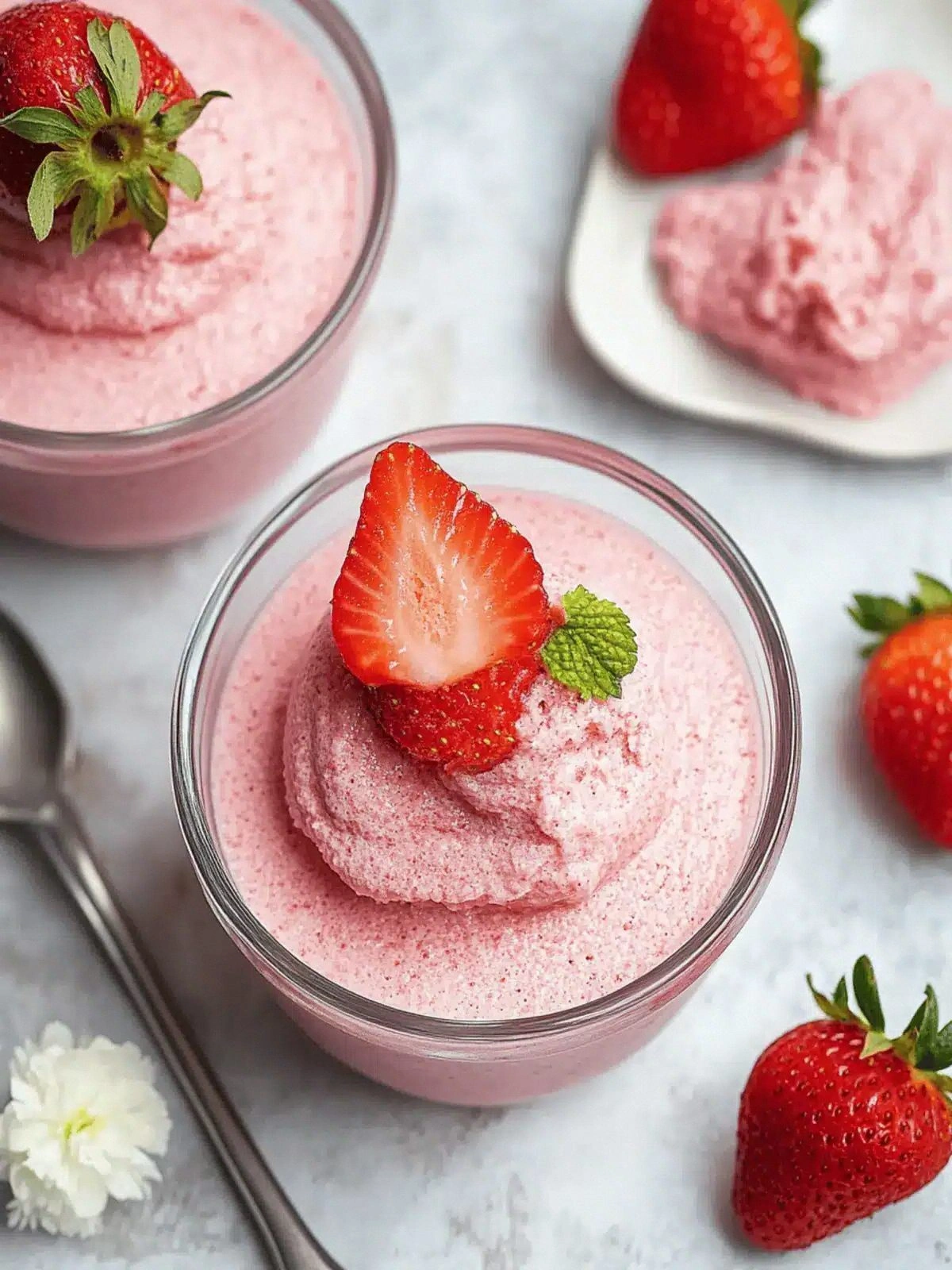
- Before serving, garnish each mousse with a fresh strawberry slice and a dusting of coconut flakes. A drizzle of maple syrup adds a glossy finish and an extra burst of flavor. The final look should be a vibrant pink cloud resting atop a creamy coconut base—an eye‑catching dessert that’s almost too pretty to eat.
That’s it—you did it. But hold on, I’ve got a few more tricks that will take this to another level. The next section will give you insider knowledge that turns an already great mousse into an unforgettable masterpiece.
Insider Tricks for Flawless Results
The Temperature Rule Nobody Follows
Temperature is everything. If the coconut cream is too hot, the agar will over‑set, making the mousse rubbery. Conversely, if it’s too cold, the agar won’t activate properly. The sweet spot is a gentle warmth—just enough that the mixture feels like lukewarm milk. Use a thermometer if you’re precise; 95°F (35°C) is the sweet spot. This trick ensures a silky, melt‑in‑your‑mouth texture every time.
Why Your Nose Knows Best
Smell is a powerful indicator of flavor development. As the agar sets, you’ll notice a faint, almost floral scent. That’s the perfect cue that the mousse is ready to chill. If you don’t notice any aroma, let it sit a few more minutes. Your nose can help you avoid over‑cooking the agar, which would result in a rubbery texture.
The 5‑Minute Rest That Changes Everything
After folding the aquafaba, let the mixture rest for 5 minutes before chilling. This pause allows the foam to settle, reducing the risk of collapse. Think of it as letting a soufflé rest before it falls—except in this case, the mousse will stay light and airy. If you skip this step, the mousse may become dense and lose that cloud‑like quality.
Use a Silicone Mold for a Clean Finish
Silicone molds give you a neat, uniform shape that’s perfect for serving. They also make removal painless, preventing the mousse from sticking to the sides. If you’re making a batch for a party, molds allow you to serve individual portions instantly, saving time on plating. Just remember to lightly grease the molds with a neutral oil if you’re not confident the mousse will release easily.
Garnish with a Twist
A simple strawberry slice is classic, but consider adding a sprig of fresh mint or a drizzle of balsamic reduction for a savory contrast. The mint’s bright green will pop against the pink mousse, while the balsamic’s acidity will cut through the sweetness. These small touches elevate the dessert from good to unforgettable.
Avoid Over‑Whisking the Aquafaba
Aquafaba is delicate; over‑whisking can cause it to lose volume, making the mousse dense. Watch for the peaks to hold their shape but not become stiff. If you see the peaks flattening, stop whisking immediately. A quick visual test—dip a spoon into the foam; if the peaks hold, you’re good.
Creative Twists and Variations
This recipe is a playground. Here are some of my favorite ways to switch things up:
Tropical Twist
Swap coconut cream for coconut milk to lighten the mousse, and add a splash of pineapple juice for a tropical flair. The result is a bright, tropical mousse that’s perfect for a beachside brunch.
Chocolate Drizzle
Melt dark chocolate and drizzle it over the finished mousse. The bittersweet chocolate contrasts with the sweet strawberries, creating a sophisticated flavor profile.
Balsamic Reduction
Finish the mousse with a drizzle of balsamic reduction. The tangy acidity cuts through the sweetness, making it a perfect palate cleanser after a rich meal.
Minted Freshness
Add a few fresh mint leaves into the blender for a subtle herbal note. The mint adds a refreshing undertone that pairs beautifully with the strawberries.
Almond Crumble Crust
Fold a handful of almond flour and a pinch of sea salt into the strawberry puree before adding the coconut cream. The result is a nutty crust that adds texture and depth.
Maple‑Glazed Strawberries
Sauté strawberries with a splash of maple syrup until they caramelize. Use these glazed berries as a topping for the mousse, adding a caramelized flavor that enhances the overall sweetness.
Storing and Bringing It Back to Life
Fridge Storage
Store the mousse in airtight containers in the refrigerator for up to 48 hours. The agar keeps it firm, but it will soften slightly over time. Before serving, let it sit at room temperature for 10 minutes to regain its airy texture.
Freezer Friendly
For longer storage, place the mousse in a freezer‑safe container and freeze for up to 2 weeks. When ready to serve, thaw in the refrigerator overnight. A quick 5‑minute reheat in the microwave will restore the mousse’s melt‑in‑your‑mouth quality.
Best Reheating Method
If the mousse has set too firm, add a tiny splash of coconut milk or water, then gently warm it in a double boiler. Stir until the mixture is silky again. Avoid direct heat, as it can cause the agar to over‑set.