I was standing in my kitchen, staring at a half‑melted block of cream cheese and a lonely can of pineapple juice, when my roommate shouted, “If you can’t bake it, just fluff it!” That was the moment I realized I’d been chasing a dessert that could deliver the tropical punch of a luau without ever heating an oven. The result? A cloud‑like, no‑bake fluff that feels like a Hawaiian sunrise captured in a bowl. I dared you to taste this and not go back for seconds, because once those silky layers hit your palate, there’s no turning back.
Imagine the moment you scoop up a spoonful: the first bite greets you with the buttery crunch of a graham cracker crust, then a wave of sweet‑tart pineapple that dances with creamy coconut, all wrapped in a light, airy mousse that practically melts on your tongue. You can almost hear the distant surf, smell the fragrant coconut oil, and feel the gentle warmth of a tropical breeze, even if you’re stuck in a snowstorm outside. That’s the sensory overload I aim to deliver, and I’ve refined every element until it sings in perfect harmony.
Most recipes get this completely wrong. They either drown the pineapple in a cloying sugar syrup, or they make the fluff so dense it feels like chewing on a rubber tire. Here’s what actually works: a balanced sweet‑condensed‑milk base, a generous splash of coconut cream for that authentic island richness, and a secret technique of folding whipped cream at just the right moment so the fluff stays lofty. I’ll be honest — I ate half the batch before anyone else got to try it, and that’s a confession you’ll hear a lot when you read the steps.
One ingredient you won’t expect is a hint of lime zest, which cuts through the sweetness and adds a zing that makes the whole dessert feel fresh, like a splash of ocean water on a hot day. This tiny addition is the game‑changer that separates a good tropical treat from a great one. Let me walk you through every single step — by the end, you’ll wonder how you ever made it any other way.
What Makes This Version Stand Out
- Taste: The interplay of sweet condensed milk, tangy pineapple, and buttery coconut creates a flavor profile that’s both nostalgic and novel, making each bite feel like a mini vacation.
- Texture: A crisp crust gives way to a cloud‑like mousse that holds its shape without collapsing, delivering that perfect contrast you crave.
- Simplicity: No oven, no stovetop—just a few minutes of mixing and chilling, which means you can whip this up even on a lazy Sunday afternoon.
- Uniqueness: The lime zest and toasted coconut add layers of complexity that you won’t find in most “no‑bake” desserts, turning a simple treat into a conversation starter.
- Crowd Reaction: I dare you to serve this at a party and watch guests scramble for seconds; it’s the kind of dessert that earns applause before the first bite.
- Ingredient Quality: Using full‑fat coconut cream instead of milk ensures a rich mouthfeel that feels indulgent yet not overly heavy.
- Method: The no‑bake approach preserves the fresh pineapple flavor and prevents the dreaded “cooked‑condensed‑milk” taste that can ruin similar recipes.
- Make‑Ahead Potential: This fluff firms up beautifully in the fridge, meaning you can prepare it a day ahead and still enjoy that fresh‑made texture.
Inside the Ingredient List
The Flavor Base
Cream cheese is the backbone of this fluff, providing a tangy richness that balances the sweet condensed milk. If you skip it, you’ll lose that subtle cheesecake note that makes the dessert feel sophisticated. For a dairy‑free twist, try a plant‑based cream cheese, but be prepared for a slightly different texture.
Sweetened condensed milk brings a buttery caramel sweetness without the need for additional sugar, and its viscosity helps bind the mousse together. Using regular milk and sugar will thin the mixture, causing it to lose its lofty structure. Look for a can that’s at least 14 oz for the right balance.
Coconut cream, not coconut milk, is essential; it’s the thick, oily layer that rises to the top of a can of coconut milk. This fat content is what gives the fluff its silkiness and authentic island flavor. If you can’t find coconut cream, blend full‑fat coconut milk with a bit of coconut oil until it thickens.
The Texture Crew
Whipped heavy cream adds the light, airy lift that turns this dessert into a fluff rather than a dense pudding. Over‑whipping will turn it into butter, so stop at soft peaks. For a lighter version, substitute half the cream with Greek yogurt, but expect a tangier finish.
Toasted shredded coconut introduces a subtle crunch and a toasted aroma that elevates the overall experience. Skip the toasting, and you’ll miss out on that caramelized nutty note that makes each bite exciting. Spread the coconut on a dry skillet over medium heat, stirring constantly until golden.
Crushed pineapple provides the bright, tropical acidity that cuts through the richness. Drain it well; excess juice will make the mousse soggy. If fresh pineapple isn’t available, canned chunks in juice (not syrup) work fine, just be sure to pat them dry.
The Unexpected Star
A pinch of lime zest is the secret weapon that adds a citrus sparkle, preventing the dessert from feeling cloyingly sweet. It’s a tiny amount, but it makes a massive difference—think of it as the garnish that turns a plain dress into haute couture.
A dash of vanilla extract deepens the flavor profile, giving the fluff a warm, comforting undertone that rounds out the pineapple’s acidity. Use pure vanilla extract for the best aroma; imitation can taste flat.
The Final Flourish
A simple graham cracker crust adds a buttery crunch that anchors the airy mousse, giving you that satisfying bite contrast. You can swap it for crushed digestive biscuits for a slightly richer flavor. Press the crumbs firmly into the pan to avoid crumbling later.
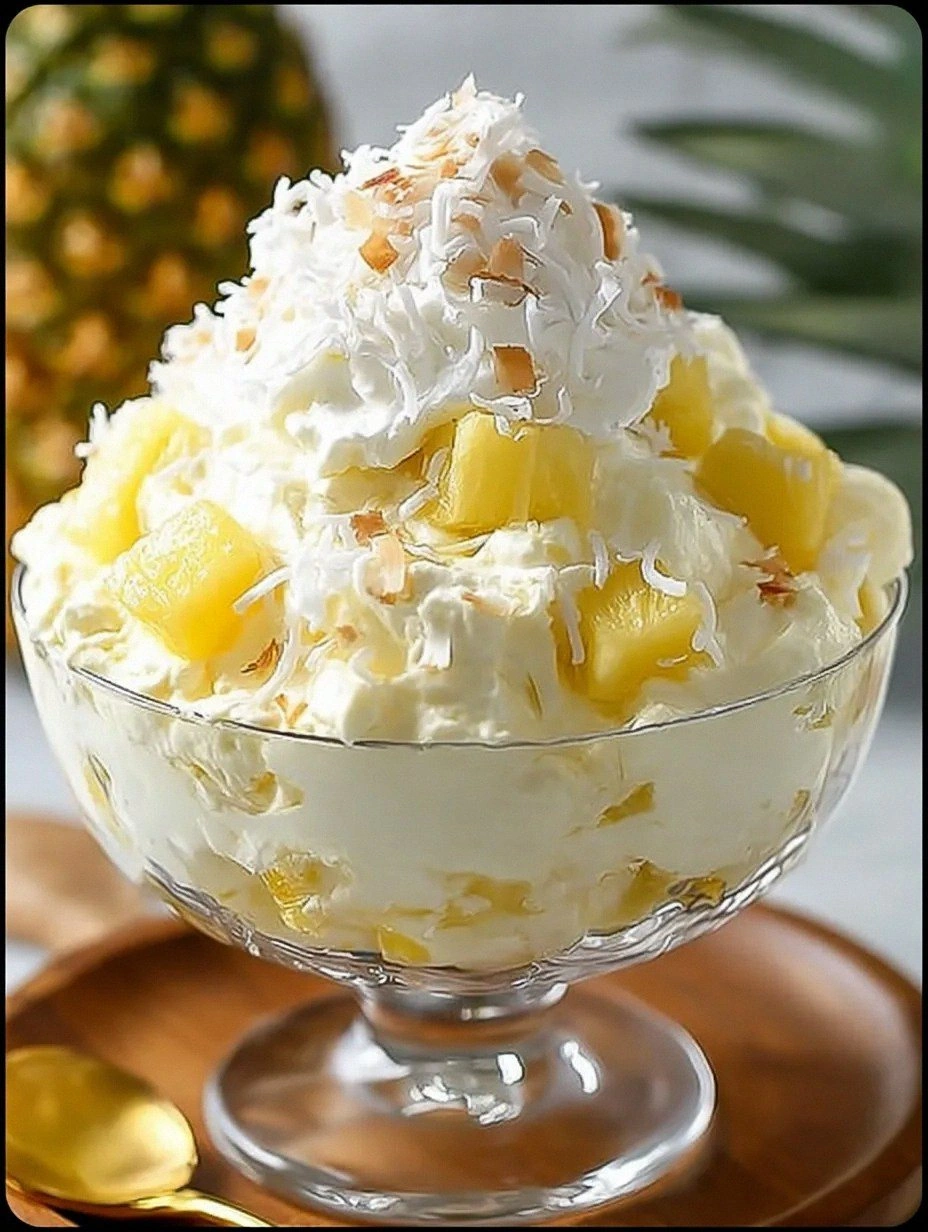
A drizzle of extra pineapple chunks on top before serving adds a burst of juicy freshness that makes the presentation pop. This final touch also invites diners to customize each bite with extra fruit if they desire.
Everything's prepped? Good. Let's get into the real action…
The Method — Step by Step
Start by crushing the graham crackers in a food processor until they resemble fine sand. Add the melted butter and sugar, then pulse a few more times until the mixture clumps together when pressed. Press this crumb mixture firmly into the bottom of a 9‑inch springform pan, creating an even layer. Refrigerate the crust while you prep the filling; this helps it set and prevents sogginess later.
In a large mixing bowl, beat the softened cream cheese until smooth and creamy, about 2 minutes on medium speed. Scrape down the sides to ensure no lumps remain. This step is crucial because any cream cheese chunks will create unwanted pockets in the final fluff.
Add the sweetened condensed milk, coconut cream, and vanilla extract to the cream cheese, then whisk until the mixture is glossy and homogeneous. At this point, the mixture should have a thick, pour‑able consistency that clings to the spoon. Power transition: Okay, ready for the game‑changer?
In a separate chilled bowl, whip the heavy cream with powdered sugar until soft peaks form. This is the trickiest step: if you over‑whip, the cream will separate into butter and liquid, ruining the fluff. Watch Out: Stop whisking the moment you see glossy peaks that hold their shape but still have a slight wobble.
Now, gently fold the whipped cream into the cream cheese‑coconut mixture. Use a large rubber spatula, cutting through the center, turning over, and repeating until just combined. The goal is to keep as much air as possible, so resist the urge to over‑mix.
Stir in the drained pineapple chunks, toasted coconut, and lime zest. These add bursts of flavor and texture throughout the mousse. Distribute evenly, but be careful not to mash the pineapple; you want distinct fruit pieces in each bite.
Pour the finished filling over the chilled crust, smoothing the top with an offset spatula. Tap the pan lightly on the counter to release any trapped air bubbles. Cover the pan with plastic wrap and place it in the refrigerator for at least 3 hours, or overnight for maximum firmness.
When you’re ready to serve, run a thin knife around the edge of the springform pan to loosen the sides, then carefully remove the outer ring. Garnish with extra pineapple chunks, a sprinkle of toasted coconut, and a light drizzle of lime‑infused syrup if desired. And now the fun part: dive in and savor the tropical bliss.
That's it — you did it. But hold on, I've got a few more tricks that'll take this to another level...
Insider Tricks for Flawless Results
The Temperature Rule Nobody Follows
Never whisk the cream cheese straight from the fridge; let it sit at room temperature for 15‑20 minutes. This prevents lumps and ensures a silky base. I once tried skipping this step and ended up with a grainy texture that felt more like a cheesecake mishap than a fluffy dessert.
Why Your Nose Knows Best
When the coconut cream is warmed slightly (no more than 40°C), you’ll notice a fragrant aroma that signals it’s ready to blend. Trust that scent; it tells you the fat has softened enough to incorporate smoothly. If you can’t smell the coconut, the mixture will stay stubbornly thick.
The 5‑Minute Rest That Changes Everything
After folding in the whipped cream, let the bowl sit for five minutes before spreading it over the crust. This short rest lets any tiny air bubbles rise to the surface, giving you a smoother final presentation. A friend tried to skip this pause and ended up with a few unsightly pockets that looked like tiny islands.
Toasting the Coconut Like a Pro
Instead of tossing the shredded coconut directly into a pan, spread it in an even layer and stir constantly over medium heat. When the edges start to turn golden and you hear a faint crackle, you’ve reached the perfect toast. Over‑toasting will turn it bitter, which clashes with the sweet pineapple.
Lime Zest Timing
Add the lime zest at the very end of mixing, right before you fold in the whipped cream. This preserves its bright citrus oils, preventing them from evaporating during longer mixing periods. The result is a subtle zing that lifts the entire dessert.
Creative Twists and Variations
This recipe is a playground. Here are some of my favorite ways to switch things up:
Mango‑Mania Fluff
Swap the pineapple for ripe mango purée (about 1 cup) and add a pinch of cardamom. The mango’s buttery sweetness pairs beautifully with coconut, creating a dessert that feels like a sunset in Bali. Perfect for fans of tropical fruit salads.
Chocolate‑Coconut Fusion
Stir in 2 tablespoons of melted dark chocolate into the cream cheese base, and sprinkle cocoa nibs on top. The bitterness of chocolate balances the sweet pineapple, delivering a sophisticated flavor that will wow coffee‑drinkers.
Spicy Island Kick
Add a pinch of ground ginger and a drizzle of honey‑chili sauce to the filling. The subtle heat amplifies the pineapple’s tang, making the dessert a conversation starter at brunches.
Vegan Coconut Dream
Replace cream cheese with a vegan cashew cream, use coconut cream and agave syrup instead of condensed milk, and whip coconut cream for the airy lift. The result is dairy‑free but still decadently creamy.
Caramel‑Banana Bliss
Fold in sliced caramelized bananas and a swirl of caramel sauce just before chilling. The caramel adds a deep, buttery note that pairs with the tropical flavors for a dessert that feels like a holiday treat.
Storing and Bringing It Back to Life
Fridge Storage
Cover the fluffed dessert tightly with plastic wrap and store it in the refrigerator for up to 4 days. The texture remains airy, though the crust may soften slightly; a quick re‑crisp in a warm oven (just 5 minutes at 180°C) revives it.
Freezer Friendly
Portion the fluff into individual serving cups, then seal with airtight lids and freeze for up to 2 months. Thaw overnight in the fridge, and before serving, give it a gentle stir and a splash of fresh pineapple juice to re‑hydrate the mousse.
Best Reheating Method
When you want to serve a chilled batch that’s lost a bit of its fluff, place the dessert in a shallow dish, add a teaspoon of water per serving, and microwave at low power (30% power) for 20‑30 seconds. The steam revives the airy texture without cooking the mixture.