It started with a burnt, over‑cooked salmon that left me clutching my apron like a lifeline. I was staring at a blackened fillet, the smell of singed fish wafting through the kitchen, and I thought, “I could do better.” That moment sparked a midnight culinary experiment, and the result was a revelation that would become my go‑to dish. I dared myself to taste this and not go back for seconds, and the flavor explosion proved the promise.
The kitchen smelled of caramelized sugar, bright citrus, and a hint of sea salt. My ears rang with the sizzling hiss of oil meeting the pan, a sound that promised crispness. The first bite was a burst of tropical sweetness, the mango’s juice mingling with the savory glaze, while the salmon’s flesh felt buttery and tender. The aroma was a warm hug, the texture a contrast between silky fish and a glossy, sticky coating. The finish left a lingering note of lime that tickled the tongue.
What makes this version stand out is that it’s not just a salmon dish; it’s a passport to an island escape. The sauce coats the fish like velvet, creating a glossy sheen that caramelizes in just a few minutes. The mango isn’t a garnish; it’s the star, its natural sweetness balancing the salty teriyaki. The recipe keeps the process simple yet sophisticated, letting the ingredients sing rather than compete. It’s the kind of dish that turns a regular dinner into a celebration, and I’ve had friends ask for the recipe after each bite.
I’ll be honest — I ate half the batch before anyone else got to try it. But the secret trick that will make all the difference is a quick glaze reduction that thickens the sauce into a glaze that sticks to every edge of the salmon. Picture yourself pulling this out of the pan, the whole kitchen smelling incredible, and the plate gleaming with a sweet‑savory glaze that invites a second bite. Let me walk you through every single step — by the end, you’ll wonder how you ever made it any other way.
What Makes This Version Stand Out
- Taste: The combination of sweet mango, tangy lime, and umami teriyaki creates a flavor profile that feels like a tropical vacation. Each bite is a harmony of sweet, salty, and citrusy notes that dance on the palate.
- Texture: The salmon remains moist and flaky while the glaze forms a crisp, caramelized crust that snaps slightly when you bite through it. The contrast keeps the dish exciting and prevents the fish from becoming mushy.
- Simplicity: With only nine ingredients and a handful of steps, this recipe is a quick win for busy weeknights. No fancy equipment or exotic spices required.
- Uniqueness: The mango isn’t a side; it’s folded into the sauce, giving the dish a depth of flavor that sets it apart from typical teriyaki salmon.
- Crowd Reaction: At family gatherings, guests ask for the recipe and often come back for seconds. The dish is a conversation starter and a crowd‑pleaser.
- Ingredient Quality: Fresh, ripe mangoes and high‑quality salmon make all the difference, turning a simple recipe into a gourmet experience.
- Cooking Method: Pan‑searing followed by glaze reduction locks in moisture and creates a caramelized finish that’s both visual and culinary.
- Make‑Ahead Potential: The sauce can be prepared a day ahead, allowing the salmon to marinate in the glaze for enhanced flavor.
Inside the Ingredient List
The Flavor Base
Teriyaki sauce is the backbone of this dish, providing a deep umami foundation that pairs beautifully with the sweet mango. It’s the bridge between the fish’s natural flavor and the glaze’s caramelized finish. Skipping it would leave the dish flat and lacking that signature Asian nuance.
The Sweet Anchor
The mango is more than a garnish; it’s the sweet counterpoint that balances the salty teriyaki. A ripe mango offers a creamy texture and a burst of juice that coats the salmon. If you can’t find mango, a ripe peach or apricot can substitute, but the flavor profile will shift slightly.
The Sticky Sweetener
Honey is the key to creating a glossy glaze that sticks to the fish. It adds a subtle floral note and helps the sauce caramelize. If you prefer a lighter touch, try maple syrup or agave nectar; just remember the flavor will lean sweeter.
The Bright Counterpoint
Fresh lime juice cuts through the richness of the glaze, adding a zesty brightness that lifts the entire dish. A splash of lime also helps to keep the fish moist during cooking. If lime is unavailable, lemon juice can be used, though the acidity will be slightly different.
The Final Flourish
Fresh cilantro adds a herbal freshness that contrasts the sweet glaze and bright lime. It also brings a pop of color that makes the plate visually appealing. If cilantro is not your favorite, parsley or basil can provide a mild alternative.
Everything’s prepped? Good. Let’s get into the real action.
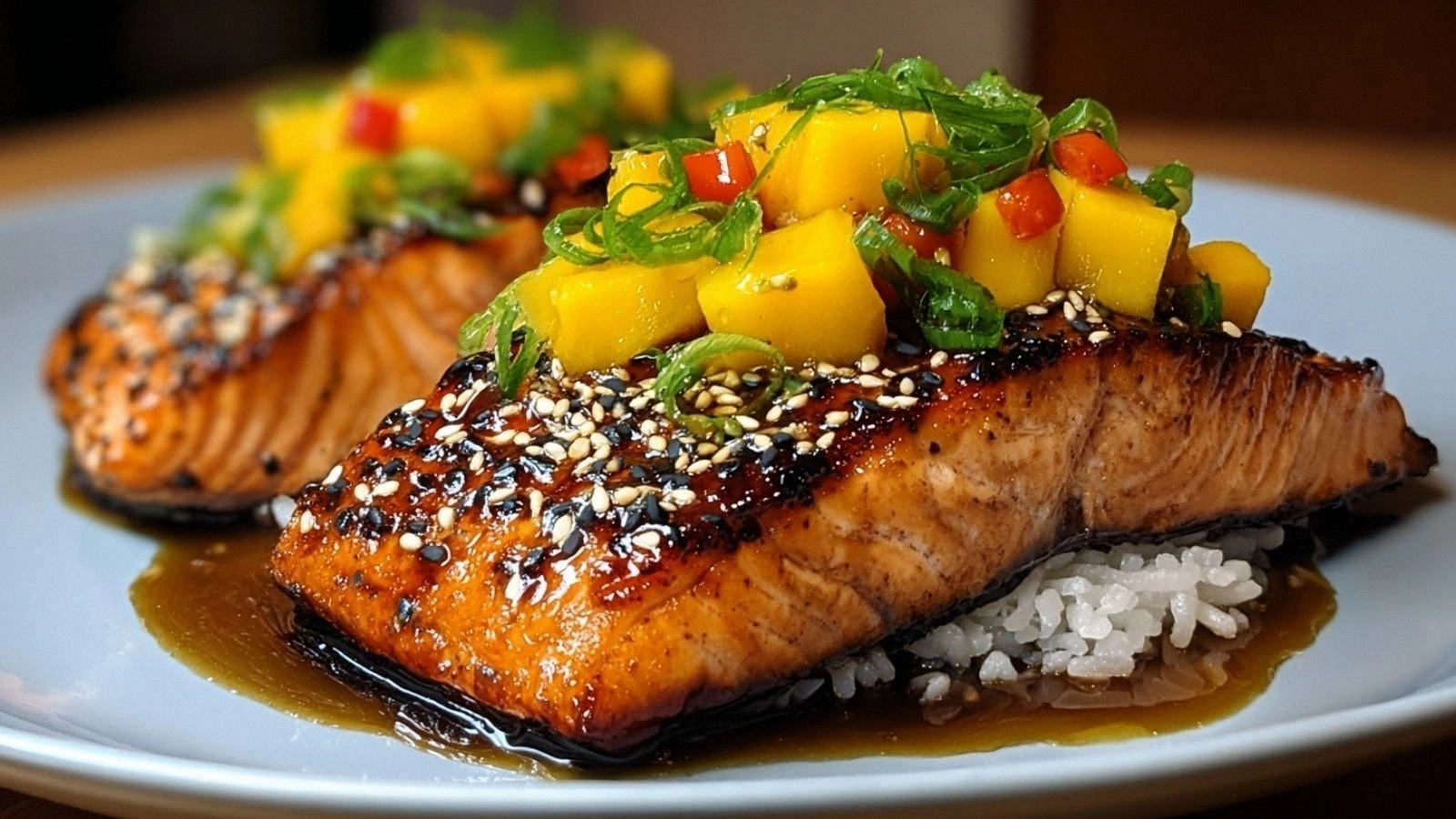
The Method — Step by Step
- Start by patting the salmon fillets dry with paper towels. This step is crucial; moisture on the surface will prevent a proper sear and cause the fillets to steam instead of caramelize. Season both sides with salt and pepper, letting the seasoning penetrate the flesh. The fish should look glossy and slightly translucent when you’re ready to cook.
- Heat a large skillet over medium‑high heat and add the tablespoon of olive oil. Once the oil shimmers, slide the salmon fillets skin‑side down into the pan. You should hear a satisfying sizzle that signals the pan is hot enough. Cook the fillets for about 3–4 minutes, until the skin is crisp and the edges start to pull away from the pan.
- Flip the fillets gently and add the teriyaki sauce, honey, lime juice, and soy sauce to the pan. The sauce will bubble and coat the fillets, creating a glossy glaze. Stir to ensure the fish is evenly coated. Keep the heat moderate so the glaze reduces without burning.
- Reduce the heat to medium and let the sauce simmer for 5 minutes, spooning it over the fillets as it thickens. The edges should start to pull away from the pan, indicating the glaze is caramelizing. If the sauce thickens too much, add a teaspoon of water to re‑loosen it.
- Add the diced mango to the pan, stirring gently so it doesn’t break apart. The mango will release its juice, mingling with the glaze and creating a luscious, glossy coating. The aroma at this point is intoxicating, a sweet perfume that makes you want to dig in immediately.
- Remove the skillet from heat and let the salmon rest for 2 minutes. This brief rest allows the juices to redistribute, keeping the fillets moist and tender. During this time, the glaze will set into a glossy, caramelized finish that clings to the fish.
- Serve the salmon fillets on a bed of steamed rice or quinoa, spooning the extra glaze over the grains. Garnish with additional cilantro and a wedge of lime on the side. The dish is now ready to be devoured, offering a symphony of textures and flavors that will leave you craving a second plate.
That’s it — you did it. But hold on, I’ve got a few more tricks that will take this to another level. These insider tips will ensure your mango teriyaki salmon always comes out perfect, no matter what your kitchen looks like.
Insider Tricks for Flawless Results
The Temperature Rule Nobody Follows
Many cooks think high heat is the key to a good sear, but the secret is to start with medium‑high and then lower the heat once the fillets are in. This prevents the outside from burning before the inside is cooked. I once cooked at full blast and ended up with a charred crust and raw center—lesson learned.
Why Your Nose Knows Best
A quick sniff of the glaze can tell you if it’s ready. When the sauce starts to thicken and smells caramelized, it’s time to flip the fillets. Trusting your senses can save you from over‑cooking the salmon.
The 5‑Minute Rest That Changes Everything
Letting the salmon rest for five minutes after cooking allows the juices to redistribute. A fillet that’s been plated immediately can feel dry, while a rested fish remains silky. I’ve seen the difference in texture, and it’s worth the pause.
The Mango‑First Marinade
If you have time, mash the mango into a paste and mix it with the teriyaki sauce before cooking. This pre‑marinade infuses the fish with mango flavor from the inside out. The result is a more uniform sweetness throughout.
The Secret of Fresh‑Cut Fish
Fresh salmon should feel firm and have a mild scent. If you’re buying from a market, ask for fillets that are clear and not cloudy. Freshness is the foundation of any great salmon dish.
Creative Twists and Variations
This recipe is a playground. Here are some of my favorite ways to switch things up:
Spicy Pineapple Teriyaki
Replace the mango with diced pineapple and add a dash of sriracha to the glaze. The tropical sweetness meets a fiery kick, turning the dish into an adventurous fusion.
Herb‑Infused Salmon
Swap cilantro for fresh basil or mint. The herb’s bright flavor pairs well with the sweet glaze, giving the dish a Mediterranean twist.
Smoky Chipotle Glaze
Add a tablespoon of chipotle in adobo sauce to the teriyaki mixture. The smoky heat complements the mango’s sweetness and gives the glaze depth.
Citrus Zest Finish
Grate a bit of orange zest into the glaze for a citrusy brightness that lifts the overall flavor. The zest adds aroma and a subtle tang.
Vegan Version
Use a plant‑based salmon alternative and replace the honey with maple syrup. The dish remains flavorful, and the vegan fish keeps the same texture profile.
Glazed Salmon Skewers
Cube the salmon and thread onto skewers with mango chunks. Grill them instead of pan‑searing for a smoky, charred exterior.
Storing and Bringing It Back to Life
Fridge Storage
Cool the salmon to room temperature before refrigerating. Store in an airtight container for up to 2 days. The glaze will thicken slightly, so add a splash of water when reheating to restore its glossy sheen.
Freezer Friendly
Wrap each fillet individually in parchment paper and then in freezer film. Freeze for up to 3 months. Thaw in the refrigerator overnight and reheat gently in a skillet with a splash of water.
Best Reheating Method
Reheat on low heat, adding a tablespoon of water to keep the fish moist. Cover the skillet to trap steam and prevent the glaze from drying out. The fish will regain its tenderness and the glaze will regain its glossy finish.