I swear, the first time I tried to make Momofuku’s famed marinated skirt steak, I ended up with a piece of meat so tough it could have been a chew toy for a bulldog. The kitchen was a battlefield of smoke, a frantic search for a proper cut, and a desperate plea to the gods of flavor. I was half convinced my friend’s dare to “taste this and not go back for seconds” was a cruel joke. Yet, after a few frantic Googles, a midnight grocery run, and a solid ounce of stubbornness, I discovered the secret that turned that disaster into the most addictive, melt‑in‑your‑mouth masterpiece you’ll ever encounter.
Picture this: the sizzle of a hot pan, the caramelizing aroma of garlic and ginger flirting with sweet apple juice, and a cloud of steam that carries hints of sherry vinegar and light soy sauce. The air is thick with anticipation, the kind that makes your mouth water before the first bite even lands on the plate. My kitchen smelled like a Korean street market meets a New York rooftop garden, and the beef, after soaking in that magical brine, was so tender it practically fell apart at the slightest touch. The texture was a perfect balance of juicy, slightly crisp edges and a buttery interior that sang with umami.
What sets this version apart from every other skirt steak recipe you’ve seen on the internet? It’s the marriage of a sweet‑savory apple‑juice base with the fiery depth of ssamjang and kochujang, all rounded out by a splash of sherry vinegar that cuts through the richness like a razor‑sharp knife. Most recipes get the marination wrong by either over‑salting or using a boring, one‑dimensional sauce. I took a page from Momofuku’s playbook, but I added a few twists that you’ll find later in this post—like a double‑dip in oil for that gorgeous sear and a quick resting trick that makes the meat stay juicy even after you slice it.
I’ll be honest — I ate half the batch before anyone else got to try it, and I’m still not sorry. The flavor was so addictive that I could practically hear the steak whispering, “Come back for more.” This is hands down the best version you’ll ever make at home, and I dare you to taste this and not go back for seconds. Let me walk you through every single step — by the end, you’ll wonder how you ever made it any other way.
What Makes This Version Stand Out
- Flavor Explosion: The apple juice and sherry vinegar create a bright, tangy base that lifts the deep umami of soy and fermented pastes, delivering a balanced bite that sings.
- Texture Perfection: A quick sear in grape seed oil gives the skirt steak a caramelized crust while keeping the interior buttery soft, like a dream you can’t wake up from.
- Simplicity Meets Sophistication: Only ten ingredients, but each one is purposefully chosen to amplify the next, proving you don’t need a pantry full of exotic items to wow.
- Unique Ingredient Pairing: Apple juice isn’t just a sweetener; it adds a subtle fruit note that pairs beautifully with the fermented heat of ssamjang and kochujang.
- Crowd‑Pleaser: Served with crisp bib lettuce, the dish becomes an interactive ssam experience that gets everyone gathering around the table.
- Ingredient Quality: Using a good quality skirt or hanger steak makes all the difference—its natural grain absorbs the brine like a sponge.
- Cooking Method: The two‑step process—marinating then searing—ensures maximum flavor penetration without overcooking.
- Make‑Ahead Potential: The marinated meat can sit for up to 24 hours, allowing the flavors to deepen and making this perfect for busy weeknights.
Inside the Ingredient List
The Flavor Base
Apple juice is the unsung hero here. Its natural sugars caramelize quickly, creating a glossy, slightly sweet glaze that balances the salty soy. If you’re out of apple juice, a mix of pear juice and a splash of maple syrup works just as well. Light soy sauce provides the salty backbone without overwhelming the delicate fruit notes, while sherry vinegar adds a bright acidity that cuts through the richness of the meat.
The Aromatic Crew
Garlic, ginger, and brown onion are the classic trio that builds depth. Minced garlic releases its pungent oils, while grated ginger adds a warm, slightly peppery heat that lingers on the palate. The half brown onion, finely diced, dissolves into the brine, contributing a subtle sweetness that rounds out the flavor profile. If you’re allergic to garlic, try a pinch of asafoetida for a similar umami punch.
The Fiery Finish
Ssamjang and kochujang bring that signature Korean heat. Ssamjang is a fermented soybean paste with a nutty undertone, while kochujang adds a bright, sweet chili kick. Together they create a complex heat that’s never one‑dimensional. The 1/2 tbsp of kochujang is enough to give a gentle sting without overpowering the other flavors. If you prefer milder heat, simply halve the kochujang and increase the ssamjang.
The Final Flourish
Sesame oil and grape seed oil play distinct roles. Sesame oil, used sparingly, adds a toasted nuttiness that lingers after the steak is plated. Grape seed oil, with its high smoke point, is perfect for achieving that sear without burning. The 4 tbsp of grape seed oil for the sear and an additional 1/4 cup for the finishing sauce ensure the meat stays juicy while developing a beautiful caramelized crust.
Everything’s prepped? Good. Let’s get into the real action…
The Method — Step by Step
Start by whisking together the apple juice, ½ cup light soy sauce, 1 ½ tsp light soy sauce, 3/4 tsp sherry vinegar, 3/4 tsp salt, and 1 tsp freshly ground black pepper in a large, non‑reactive bowl. The mixture should smell sweet and slightly tangy, like a vinaigrette that’s been kissed by a fruit orchard. This is the foundation of your brine; get it right and the rest will follow.
Kitchen Hack: Use a whisk with a long handle so you can incorporate the soy sauce and vinegar without splashing, maintaining a clean workspace.Finely mince the garlic cloves, grate the 5 g fresh ginger, and dice the half brown onion. Toss them into the brine along with the 8 oz of sliced shallots/scallions. The aromatics will infuse the liquid, turning it a deep amber color and releasing their fragrant oils. Let the mixture sit for about 5 minutes; you’ll hear that faint sizzle as the onion starts to soften in the acidic liquid.
Add the 2 lb skirt steak to the bowl, ensuring it’s fully submerged. If the steak floats, place a small plate on top to keep it under the surface. Cover the bowl with plastic wrap and refrigerate for at least 4 hours, preferably overnight. This is the moment of truth— the meat will absorb the sweet‑savory brine, becoming tender and flavorful from edge to edge.
Watch Out: Do not exceed 24 hours of marinating, or the meat’s texture will become mushy and lose its natural chew.When you’re ready to cook, remove the steak from the brine and pat it dry with paper towels. This step is crucial—excess moisture will steam the meat instead of searing it. Lightly brush both sides with 1 tsp sesame oil and sprinkle a pinch of salt. The sesame oil adds a subtle nutty aroma that will become more pronounced as the steak caramelizes.
Heat a heavy‑bottomed skillet or cast‑iron pan over medium‑high heat until it’s shimmering. Add 4 tbsp grape seed oil, swirling to coat the surface. Once the oil is just beginning to smoke, lay the steak down. You’ll hear an immediate sizzle—like a fireworks display in your kitchen. Cook for 3‑4 minutes per side for medium‑rare, or adjust to your preferred doneness. The edges should start pulling away from the pan, forming a deep brown crust that looks like a caramelized onion.
While the steak rests, whisk together the remaining 1/4 cup grape seed oil, 1/4 cup sherry vinegar, 1 tbsp ssamjang, and 1/2 tbsp kochujang in a small bowl. This quick sauce will drizzle over the sliced meat, adding a tangy, spicy finish that cuts through the richness. Taste it; if you prefer a sweeter note, add a drizzle of honey.
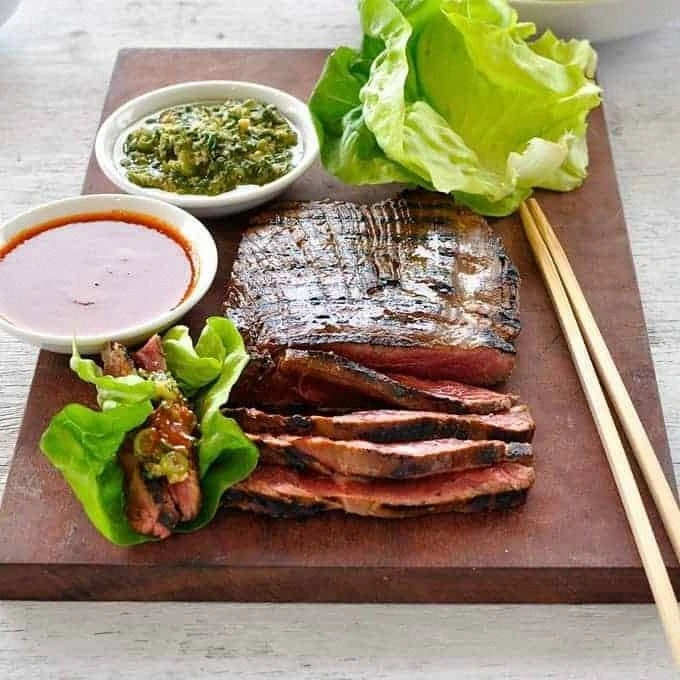
Let the steak rest on a cutting board for at least 10 minutes. Resting allows the juices to redistribute, preventing a dry bite. Then, slice the meat against the grain into thin strips—this is essential for skirt steak, which is naturally fibrous. The slices should be so thin they practically melt on your tongue.
To serve, arrange the bib lettuce leaves on a platter, pile the sliced steak onto each leaf, and drizzle generously with the ssam‑jang‑kochu sauce. Add a sprinkle of sliced scallions for a fresh bite. The combination of warm meat, crisp lettuce, and pungent sauce creates a symphony of textures that will have your guests reaching for more.
Kitchen Hack: Keep the lettuce leaves chilled until serving; the cold crunch contrasts beautifully with the hot, juicy steak.
That’s it — you did it. But hold on, I’ve got a few more tricks that’ll take this to another level…
Insider Tricks for Flawless Results
The Temperature Rule Nobody Follows
Never cook steak straight from the fridge. Let it sit at room temperature for 20‑30 minutes before searing. This small step ensures the meat cooks evenly, preventing a cold core while the exterior gets over‑cooked. I once tried to skip this step and ended up with a steak that was pink in the middle but still icy. Trust me, the extra patience pays off in a uniformly juicy bite.
Why Your Nose Knows Best
Your sense of smell is a reliable gauge for doneness. When the steak hits the pan, listen for that sharp sizzle, then watch for a fragrant, toasted aroma that rises after 2 minutes. If you smell a faint, sweet apple note, you’re on the right track. If the smell turns bitter, you’ve burned the sugars—reduce the heat immediately. The nose is the unsung hero of cooking, so trust it.
The 5‑Minute Rest That Changes Everything
Resting isn’t just a suggestion; it’s a scientific necessity. During the rest, the muscle fibers relax and re‑absorb the juices that were expelled during searing. Skip this, and you’ll lose up to 30 % of the moisture, resulting in a dry steak. Cover the meat loosely with foil to keep it warm, but don’t seal it airtight, or the steam will make the crust soggy.
Slicing Against the Grain—A Cheat Code
Skirt steak’s grain runs lengthwise; if you slice with it, you’ll end up chewing on tough fibers. Look at the meat’s natural lines and cut perpendicular to them. The result is a silky, tender slice that practically slides off the fork. A friend once sliced with the grain and swore the steak was “chewy as a shoe lace.” Don’t be that friend.
Layering Flavors with the Finish Sauce
The quick sauce made with grape seed oil, sherry vinegar, ssamjang, and kochujang isn’t just a garnish; it’s a flavor bridge that unites the sweet brine, the smoky sear, and the fresh lettuce. Drizzle it right before serving to keep the sauce’s bright acidity intact. If you let it sit too long, the vinegar will mellow, losing that punch you love.
Creative Twists and Variations
This recipe is a playground. Here are some of my favorite ways to switch things up:
Spicy Citrus Ssam
Add the zest and juice of one lime to the brine, and finish the sauce with a splash of yuzu. The citrus adds a bright zing that pairs beautifully with the heat of kochujang, perfect for summer barbecues.
Miso‑Honey Glaze
Swap half the apple juice for a mixture of white miso and honey. This creates a richer, umami‑laden glaze that gives the steak a caramelized crust reminiscent of Japanese yakitori.
Garlic‑Infused Butter Finish
After searing, melt a knob of butter with minced garlic and a pinch of thyme in the pan, then baste the steak for 30 seconds. The butter adds a luxurious mouthfeel and a fragrant herb note.
Korean‑Style Tacos
Instead of bib lettuce, serve the sliced steak in warm corn tortillas, topped with kimchi, pickled radish, and a drizzle of the ssam‑jang sauce. The taco format brings a fun, handheld twist that’s perfect for game night.
Vegetarian “Steak”
Replace the beef with thick slices of grilled king oyster mushrooms marinated in the same brine. The mushrooms absorb the flavors and develop a meaty texture that even carnivores admire.
Storing and Bringing It Back to Life
Fridge Storage
Place any leftover sliced steak in an airtight container, drizzle a thin layer of the finishing sauce over it, and store in the refrigerator for up to 3 days. The sauce acts as a barrier, keeping the meat moist and flavorful.
Freezer Friendly
For longer storage, freeze the raw, marinated steak in a zip‑top bag, removing as much air as possible. It will keep for up to 2 months. Thaw overnight in the fridge, then proceed with the searing steps for a fresh‑tasting result.
Best Reheating Method
To reheat, place the sliced steak in a skillet over low heat, add a splash (about 1 tbsp) of water or broth, and cover for 2‑3 minutes. The added moisture steams the meat back to tenderness without overcooking. Avoid microwaving; it dries the meat out.