Picture this: I’m standing in a cramped kitchen, the stove already humming, a bag of spaghetti on the counter, and a sudden craving for something that feels like a hug in a bowl. I’ve tried countless versions of spaghetti over the years—some too watery, some too dry, most just mediocre. Tonight, I’m daring myself to turn a simple pot of pasta into a showstopper, and I’ve already tasted the first bite. That moment when the sauce coats the noodles like velvet and the breadcrumb crown crackles with golden edges—yes, that’s the kind of experience I’m about to share.
I’ll be honest, I almost burned the breadcrumbs on the first try, but that’s how you learn. The aroma of garlic sizzling in olive oil, the bright pop of red pepper flakes, the subtle zing of fresh parsley—every sense is involved. It’s not just about cooking; it’s about orchestrating a symphony of flavors that dance on your tongue. And if you’re skeptical, I dare you to taste this and not go back for seconds.
What makes this version stand out from every other spaghetti recipe? It’s the meticulous layering of textures, the balance of heat and herb, and the secret crunch that lingers after you finish the first forkful. I’ve tweaked the classic to elevate it from “good” to “hands down the best version you’ll ever make at home.” The result is a dish that feels both comforting and adventurous, like a cozy blanket with a hidden fire inside.
Stay with me here—this is worth it. I’ll walk you through every single step, from the first stir of garlic to the final sprinkle of thyme. By the end, you’ll wonder how you ever made it any other way, and your guests will beg for the recipe. Let the adventure begin.
What Makes This Version Stand Out
- Taste: The sauce is a harmonious blend of olive oil, garlic, and red pepper flakes that creates a warm, comforting base. The Parmesan adds a savory depth that lifts the entire dish. The result is a flavor profile that feels both classic and bold.
- Texture: The panko breadcrumbs are toasted to a crisp, golden perfection that contrasts beautifully with the silky spaghetti. Each bite offers a satisfying crunch followed by a melt-in-your-mouth finish. This duality keeps diners coming back for more.
- Ingredient Quality: Using high‑grade olive oil and freshly grated Parmesan ensures that every component shines. Fresh parsley and thyme bring bright, aromatic notes that elevate the dish. The ingredients are simple yet premium.
- Simplicity: Despite its complex flavor, the recipe requires only a handful of ingredients and a straightforward method. You’ll finish in under an hour, making it ideal for busy weeknights. No elaborate sauces or hidden steps.
- Crowd Reaction: Friends who’ve tried this say it’s “the most unforgettable spaghetti” they’ve ever had. The crunchy breadcrumb topping sparks conversation and second servings. It’s a guaranteed hit at any gathering.
- Make‑Ahead Potential: The pasta can be cooked ahead and reheated with a splash of water to maintain moisture. The breadcrumb topping can be prepared in advance and toasted right before serving. This flexibility makes it a stress‑free dinner option.
Alright, let’s break down exactly what goes into this masterpiece…
Inside the Ingredient List
The Flavor Base
The heart of this dish is the olive oil and garlic combination. Thinly sliced garlic releases a mellow, sweet aroma as it sizzles, creating a fragrant foundation. The olive oil carries the flavors, while the red pepper flakes add a subtle heat that wakes up the palate. Skipping the garlic would make the sauce flat; the spice would feel underwhelming. For a smokier twist, lightly toast the garlic before adding the oil.
The Texture Crew
Panko breadcrumbs are the star of the texture game. Their airy, flaky structure turns into a crisp, buttery crown when toasted. The breadcrumbs absorb the olive oil and garlic, turning into a golden, crunchy topping that shatters like thin ice when bitten. If you prefer a more rustic crunch, use regular breadcrumbs; just be sure to toast them longer.
The Unexpected Star
Fresh parsley and thyme are more than garnish—they add bright, herbal notes that cut through the richness. Parsley’s peppery bite balances the buttery breadcrumbs, while thyme offers a subtle, earthy undertone. If you’re out of thyme, a pinch of oregano can mimic its depth. A handful of fresh herbs also adds a pop of color that makes the dish Instagram‑ready.
The Final Flourish
Parmesan is the finishing touch that brings everything together. Finely grated, it melts into the sauce, creating a silky coating that enhances the pasta’s texture. Extra Parmesan on top adds a salty, savory finish that’s hard to resist. A splash of cream or milk can turn this into a richer, more decadent sauce, but the classic version stays true to its roots.
Everything’s prepped? Good. Let’s get into the real action…
The Method — Step by Step
- Bring a large pot of salted water to a rolling boil. Add the spaghetti and cook until al dente, about 10 minutes. Drain, reserving a cup of pasta water. Toss the cooked pasta with a splash of olive oil to prevent sticking. Set aside.
- While the pasta cooks, heat 1/2 cup of olive oil in a large skillet over medium heat. Add the thinly sliced garlic and sauté until fragrant and lightly golden, about 2 minutes. The garlic should smell like fresh bread; if it starts to brown too quickly, lower the heat.
- Add the red pepper flakes to the skillet, stirring to combine. The mixture should release a subtle, warm aroma. This step is crucial for a balanced heat that doesn’t overpower the other flavors. If you prefer a milder dish, reduce the flakes by half.
- Turn the heat to low and pour the cooked spaghetti into the skillet. Toss the pasta with the garlic‑olive oil mixture, ensuring every strand is coated. If the sauce seems dry, add a splash of reserved pasta water to loosen it. This is the moment of truth; the pasta should feel silky and fragrant.
- While the pasta rests, heat a separate skillet over medium heat. Add 2 tablespoons of olive oil and the panko breadcrumbs. Stir frequently to toast evenly, allowing the crumbs to caramelize and turn golden brown. Watch closely; they can go from perfect to burnt in a minute.
- If you’re using minced garlic, add it to the breadcrumbs in the last minute of toasting. This infuses the crunch with a subtle garlic essence. The breadcrumbs should crackle like thin ice as they toast—if they’re not sizzling, lower the heat.
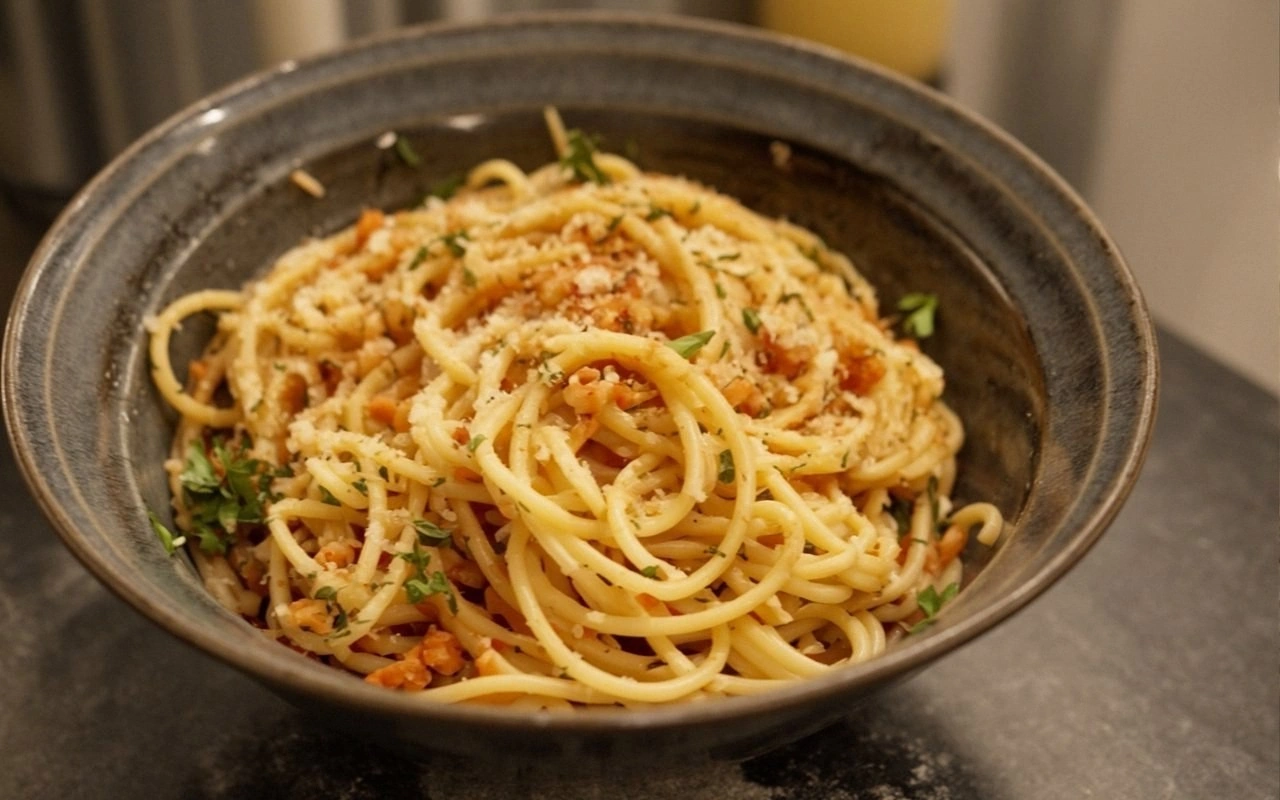
- Fold the toasted breadcrumbs into the pasta, tossing gently to coat. Sprinkle the finely grated Parmesan over the top, letting it melt into the sauce. The final dish should look like a glossy, golden bowl with a crunchy crown.
- Add fresh parsley, thyme sprigs, and any extra Parmesan you like. Give everything a final toss. The dish should smell like a warm kitchen, with a hint of fresh herbs. Plate immediately to preserve the crunch.
- Serve hot, topped with an extra sprinkle of Parmesan and a few thyme leaves for a fragrant finish. The dish should feel like a comforting hug with a crunchy surprise. If you’re feeling adventurous, add a dash of lemon zest for brightness.
That’s it— you did it. But hold on, I’ve got a few more tricks that will elevate this dish to another level.
Insider Tricks for Flawless Results
The Temperature Rule Nobody Follows
Cooking pasta at a rolling boil can actually make it gummy. Instead, bring the water to a full boil, then lower the heat to a gentle simmer before adding the spaghetti. This keeps the noodles from releasing too much starch, ensuring a firm bite that holds the sauce. I’ve seen even seasoned cooks get this wrong, but this simple tweak guarantees al dente perfection.
Why Your Nose Knows Best
When the breadcrumbs start to toast, they’ll emit a delightful crackle. If you’re unsure, let them sizzle for a minute longer. The scent of toasted crumbs is the ultimate indicator of readiness. Skipping this step leaves the topping soggy, ruining the contrast that makes the dish special.
The 5‑Minute Rest That Changes Everything
After tossing the pasta with the sauce, let it rest for 5 minutes before adding the breadcrumbs. This pause allows the pasta to absorb the flavors fully, giving each strand a silky coating. Many people skip this, resulting in a dry dish. Trust me, the extra minutes pay off.
Keep It Fresh with a Splash of Water
If the pasta seems dry after adding the breadcrumbs, pour a splash of reserved pasta water and stir quickly. The water rehydrates the noodles without diluting the sauce. A quick whisk will bring the dish back to a luscious, cohesive state.
Serve Immediately for Crunch
The breadcrumb topping is best when hot and crisp. As soon as you plate the pasta, the crumbs should still be warm, offering that satisfying crunch. If you let the dish sit, the crumbs will soften and lose their texture. Keep the plates ready to serve right away.
Creative Twists and Variations
This recipe is a playground. Here are some of my favorite ways to switch things up:
Seafood Surprise
Add sautéed shrimp or scallops to the pasta before tossing in the breadcrumbs. The briny seafood pairs beautifully with the buttery crunch. This variation is perfect for a quick dinner that feels like a fancy restaurant meal.
Mushroom Medley
Sauté sliced mushrooms with a pinch of thyme and garlic before adding them to the pasta. The earthy flavor deepens the dish, while the breadcrumb topping adds contrast. This is a hearty option for vegetarians and vegans alike.
Spicy Arrabbiata Twist
Increase the red pepper flakes to a generous amount and stir in a splash of crushed tomatoes. The sauce becomes a fiery, tomato‑based version that still benefits from the breadcrumb crunch. It’s a bold, adventurous take on the classic.
Cheese Lover’s Delight
Replace half the Parmesan with shredded mozzarella for a gooey, melty texture. The mozzarella melts into the sauce, creating a creamy, indulgent coating. The breadcrumbs still provide that essential crunch.
Mediterranean Vibes
Add chopped sun‑dried tomatoes, Kalamata olives, and a drizzle of balsamic glaze to the pasta. The sweet‑tart notes complement the savory breadcrumb topping. This version transports you to a sunny seaside kitchen.
Vegan Version
Swap the Parmesan for nutritional yeast and use olive oil for both steps. The yeast gives a nutty, cheesy flavor without dairy. The breadcrumbs can be toasted in a non‑dairy butter or more olive oil. This variation is both plant‑based and delicious.
Storing and Bringing It Back to Life
Fridge Storage
Store any leftover pasta in an airtight container in the fridge for up to 3 days. Keep the breadcrumb topping separate; it will lose its crunch if stored together. When ready to eat, reheat the pasta in a skillet with a splash of water to revive moisture.
Freezer Friendly
Freeze the cooked pasta (without breadcrumbs) in a freezer‑safe bag for up to 2 months. Thaw overnight in the fridge, then reheat with a tablespoon of olive oil or water. Add toasted breadcrumbs right before serving to restore the crunch.
Best Reheating Method
Reheat in a skillet over medium heat, adding a splash of water or broth to keep the pasta from drying out. Stir constantly until the sauce is heated through. Finish with a fresh sprinkle of parsley and a few thyme leaves for aroma.
Add a tiny splash of water before reheating — it steams back to perfection. This trick keeps the dish silky and prevents the breadcrumbs from becoming soggy.